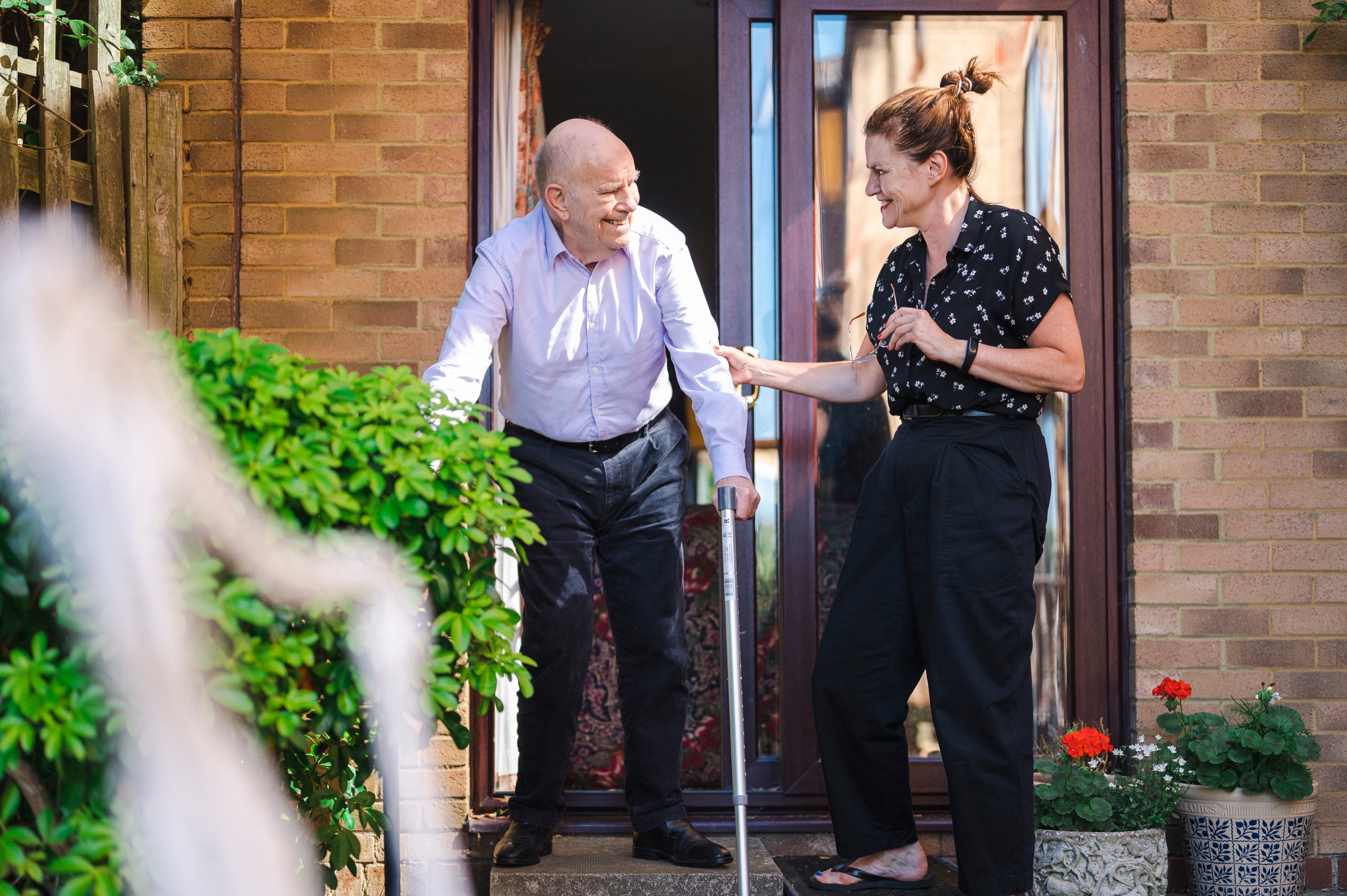
Home from hospital, but not back to normal
Weaker than before they went in. Slower on their feet. Doing less each week.
We work out what they’ve lost, then build it back at a pace they can manage.
This sounds like themPhysiotherapy and occupational therapy at home for older adults. After a fall, a hospital stay, a stroke or a slow slide nobody can name, we find out what’s really going on, treat what can be treated, and help you keep everything else on track.
Who we help
It may be a clear event, or a slow change that is hard to put into words. These are the moments we help with most.
Weaker than before they went in. Slower on their feet. Doing less each week.
We work out what they’ve lost, then build it back at a pace they can manage.
This sounds like themMaybe nothing was broken. But the confidence went, and they’ve stopped going out.
We look at what may have contributed, then work on steadiness and confidence together.
This sounds like themThe surgery went fine. The recovery has stalled, and nobody is checking on it.
We check in, and pick the recovery up where it stalled, in their own home.
This sounds like themNothing happened. But they’re going out less, forgetting things, and finding their daily routine harder to keep up.
We measure what has changed, so it becomes something you can act on.
This sounds like themArthritis, Parkinson’s, the after-effects of a stroke. Little by little, they’ve stopped doing things.
We start from what they’ve given up, and work back towards it.
This sounds like themNothing is wrong. You’d like it to stay that way.
We check where they are now, so you’ll notice when something starts to change.
This sounds like themWe also help after hip and knee replacements and fractures, and with MS, dizziness and balance problems. Not on the list? Ask anyway. If we can’t help, we’ll tell you who can.
30%
of people over 65 come home from hospital needing help with something they managed on their own before they went in.
If one of those cards sounds like your parent, you are not alone, and it is not too late.
Why it gets missed
Things can change week by week at home. Families notice first, but what they notice is scattered across calls, messages and memory.
It starts with a free call with a clinician, not a call centre. No obligation.
Book a free callWhat we do about it
You don’t need everything to be perfect today. You just need to know what needs doing now, and what can safely wait.
Specialist Home Therapy Assessment£140
One visit to understand what is really going on, what to do first, and what is not worth spending money on.
It starts with a free consultation call. If we’re not the right fit, we’ll tell you then, and it costs you nothing.
What you get back
Written for you, in plain English, to read and act on.
Home assessment · summary and plan
Prepared for the family
What is normal ageing, and what is lost strength, mobility or function that can come back. What gets worse if it is left.
Their strength, balance and walking: the stairs, getting up from a chair, getting in and out of bed. Properly tested, not guessed.
Washing, dressing, cooking, getting out. Where a fall is most likely, and which changes or equipment are worth having, and which are not.
What to do, in the order to do it. Including what you can ask the NHS and the council for, and how to ask.
The early signs, so the next change is caught in a phone call and not an ambulance.
Tell us what has changed, and we will tell you honestly whether we can help, including when we cannot.
Not an emergency service. For urgent medical advice, use NHS 111; call 999 in an emergency.